
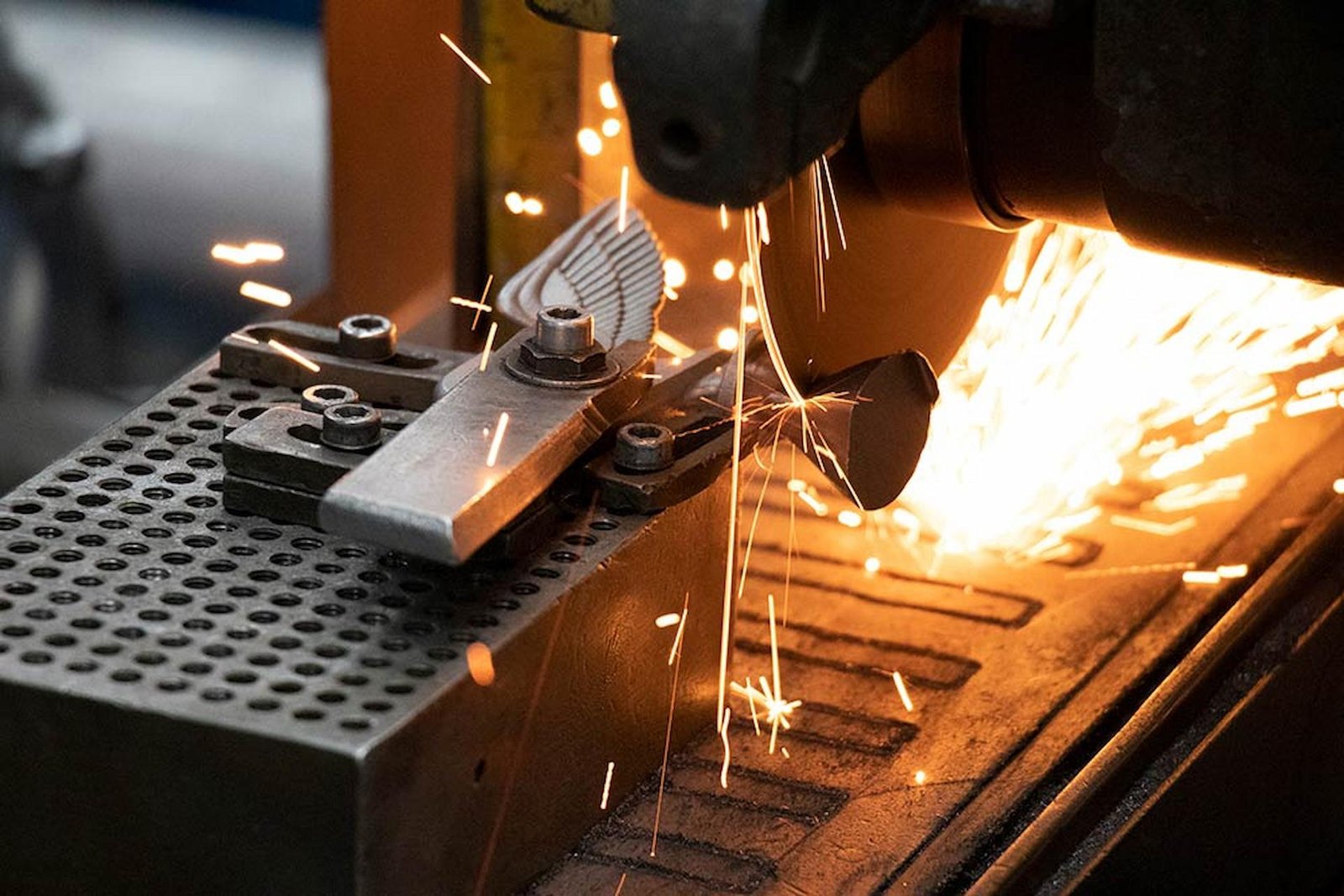
Design plays a decisive role in the success of investment casting. While the process is well known for producing complex, near-net-shape components with excellent surface finish, its effectiveness depends heavily on how a part is engineered at the design stage. Poor design decisions can increase scrap rates, drive up costs, or compromise performance. Well-considered designs, by contrast, allow engineers to fully exploit the process’s strengths.
This article outlines practical design guidelines for engineers working with Investment Casting, focusing on geometry, material behaviour, dimensional control, and process compatibility. The guidance reflects established industrial practices used by global precision casting manufacturers such as Texmo Blank and is intended to support efficient, reliable production across demanding applications.
Understanding the Capabilities of Investment Casting
Investment casting is valued for its ability to produce intricate geometries, thin walls, and tight tolerances that are difficult or uneconomical to achieve using other casting methods. Wax patterns offer a high degree of shape freedom, while ceramic shells accurately reproduce fine detail.
However, this flexibility does not eliminate design constraints. Engineers must still account for metal flow, solidification behaviour, thermal stresses, and post-casting operations. Successful designs balance functional requirements with manufacturing realities.
Wall Thickness: Striking the Right Balance
Uniform wall thickness is one of the most important principles in investment casting design. Sudden changes in section thickness can disrupt metal flow and cooling rates, leading to shrinkage defects or internal stresses.
Best practice includes:
- Maintaining consistent wall thickness wherever possible
- Using gradual transitions rather than abrupt steps
- Avoiding unnecessarily thick sections that increase cooling time
Thin walls are achievable, but they require adequate feeding and gating strategies. Early collaboration between design and casting teams helps determine realistic minimum thicknesses based on alloy selection and part size.
Fillets, Radii, and Stress Reduction
Sharp corners are a common source of problems in cast components. They restrict metal flow, concentrate stress, and increase the risk of cracking during solidification or service.
Designs should incorporate generous fillets and radii at all internal and external corners. This improves:
- Metal flow during pouring
- Structural integrity of the finished part
- Tooling and shell durability
Even small increases in radius can significantly enhance castability without affecting functional performance.
Draft Angles and Pattern Removal
Although investment casting does not rely on traditional mould parting lines, draft angles still play a role in pattern tooling and shell integrity. Components with slight draft are easier to remove from tooling and less likely to damage ceramic shells during handling.
Where functional geometry allows, designers should include modest draft on vertical surfaces. This simplifies pattern production and reduces the risk of defects later in the process.
Designing Holes, Slots, and Internal Features
One of the advantages of investment casting is the ability to integrate complex features directly into the casting, reducing the need for secondary machining. However, not all features are equally suitable for as-cast production.
Design considerations include:
- Avoiding long, unsupported cores
- Ensuring holes are properly aligned with the metal flow
- Recognising limits on minimum hole diameters
Where tight tolerances or precise surface finishes are required, it is often more efficient to design features for post-casting machining rather than forcing them into the as-cast geometry.
Dimensional Tolerances and Allowances
While investment casting offers excellent dimensional accuracy compared to many other casting processes, it is not a substitute for machining where extreme precision is required.
Engineers should:
- Apply realistic tolerance expectations
- Allow machining stock where necessary
- Identify critical dimensions early in the design
Clear distinction between as-cast dimensions and machined features helps prevent costly redesigns or rework during production.
Alloy Selection and Design Compatibility
Material choice directly influences design decisions. Different alloys behave differently during melting, pouring, and solidification. Steels, stainless steels, aluminium alloys, and nickel-based alloys each present distinct challenges.
Designers must consider:
- Shrinkage rates
- Thermal conductivity
- Mechanical property requirements
Designs that work well for one alloy may require adjustment when material specifications change. Aligning design intent with material behaviour is essential for consistent results.
Weight Optimisation and Near-Net-Shape Design
Investment casting is particularly effective for producing near-net-shape components, reducing waste and machining time. Engineers should take advantage of this by optimising designs to reduce weight without compromising strength.
This may involve:
- Integrating ribs instead of solid sections
- Eliminating unnecessary material
- Using geometry to enhance stiffness
Such approaches improve performance while supporting efficient manufacturing.
Surface Finish Expectations
Investment cast components are known for their smooth surface finish. However, surface quality is influenced by design complexity, alloy type, and shell characteristics.
Designers should:
- Avoid overly fine surface textures that may not reproduce consistently
- Identify surfaces requiring additional finishing
- Understand where cosmetic finish is critical versus functional
Clear communication of surface finish requirements helps align expectations and process planning.
Designing for Inspection and Quality Control
Quality assurance is a critical part of investment casting, particularly for safety-critical or high-performance components. Designs should facilitate inspection methods such as visual checks, dimensional measurement, and non-destructive testing.
Features that enable easy inspection access reduce ambiguity and support consistent quality outcomes.
Collaboration Between Design and Manufacturing
Perhaps the most important guideline is collaboration. Early engagement between engineers and casting specialists allows potential issues to be identified before tooling is committed.
Design reviews focused on castability often result in:
- Improved yield
- Reduced lead times
- Lower total production costs
Investment casting is most effective when design and manufacturing expertise work in parallel rather than sequentially.
Conclusion
Successful investment casting begins long before molten metal is poured. It starts with informed design decisions that respect the realities of metal flow, solidification, and process control. By applying clear guidelines around wall thickness, geometry, tolerances, and material behaviour, engineers can create components that perform reliably and manufacture efficiently.
When Investment Casting is approached as a collaborative engineering process rather than a simple production step, it delivers consistent quality, design freedom, and long-term value across a wide range of industrial applications.