
Table of Contents
- Why Pressure Testing Still Matters
- What a Strong Test Plan Should Include
- Hydrostatic and Pneumatic Testing
- Pre-Test Safety Checks
- How to Run the Test in Clear Stages
- What Test Data Can Reveal
- When External Loading and Temperature Matter
- Documentation That Makes Results Useful
- How to Choose a Pressure Testing Partner
- Common Questions About Industrial Pressure Testing
- Final Checklist for Houston Site Managers
Houston facilities operate in an environment where heat, humidity, demanding production schedules, and complex process equipment can place steady pressure on maintenance programs. For plant managers, equipment owners, and maintenance teams, a well-planned pressure test is more than a compliance task. It is a practical way to identify concerns before they lead to unplanned downtime, damaged equipment, or worker exposure.
When a project requires specialized conditions beyond a basic proof test, external load testing Houston TX services from Trybar, Inc. can help support a more realistic equipment evaluation. Based in Houston, Texas, Trybar, Inc. performs industrial pressure testing and related qualification work, including external loading, pressure cycling, temperature testing, strain recording, and insulation-resistance assessments. Its Houston testing capabilities and nationwide service area make it a relevant option for organizations that need to evaluate equipment under conditions that more closely reflect field service.
Why Pressure Testing Still Matters
Pressurized equipment stores energy. A small leak, a weakened seal, a damaged fitting, a blocked passage, or a material defect can become a larger issue when equipment is returned to service. Pressure testing gives teams a controlled opportunity to observe how a vessel, valve, pipe section, hose assembly, or component responds before it is relied upon in normal operations.
Testing should be part of a broader reliability process that also includes visual inspection, preventive maintenance, repair review, and accurate records. The U.S. Chemical Safety and Hazard Investigation Board investigates serious chemical incidents to identify root causes and safety lessons, reinforcing the value of disciplined process-safety practices around hazardous industrial equipment.
What a Strong Test Plan Should Include
A useful test begins well before anyone introduces pressure. A written plan assigns responsibility, defines safe boundaries, and makes the final result easier to interpret.
- Define the goal. Establish whether the test is intended to assess strength, leakage, pressure retention, cycling performance, temperature response, or external loading.
- Identify the equipment. Record the equipment ID, materials, connections, operating range, drawings, and approved test limits.
- Review requirements. Check applicable engineering specifications, customer requirements, manufacturer guidance, site rules, and relevant codes.
- Set test boundaries. Clearly identify the section being tested and isolate equipment that must not be exposed to test pressure.
- Assign qualified roles. Name the supervisor, operators, observers, and the person responsible for recording readings and observations.
- Prepare emergency controls. Establish barriers, communication methods, a controlled depressurization process, and clear stop-work conditions.
Hydrostatic and Pneumatic Testing
Hydrostatic testing uses a liquid test medium, while pneumatic testing uses air or another gas. The right method depends on the equipment design, cleanliness requirements, service conditions, approved procedure, and risk controls.
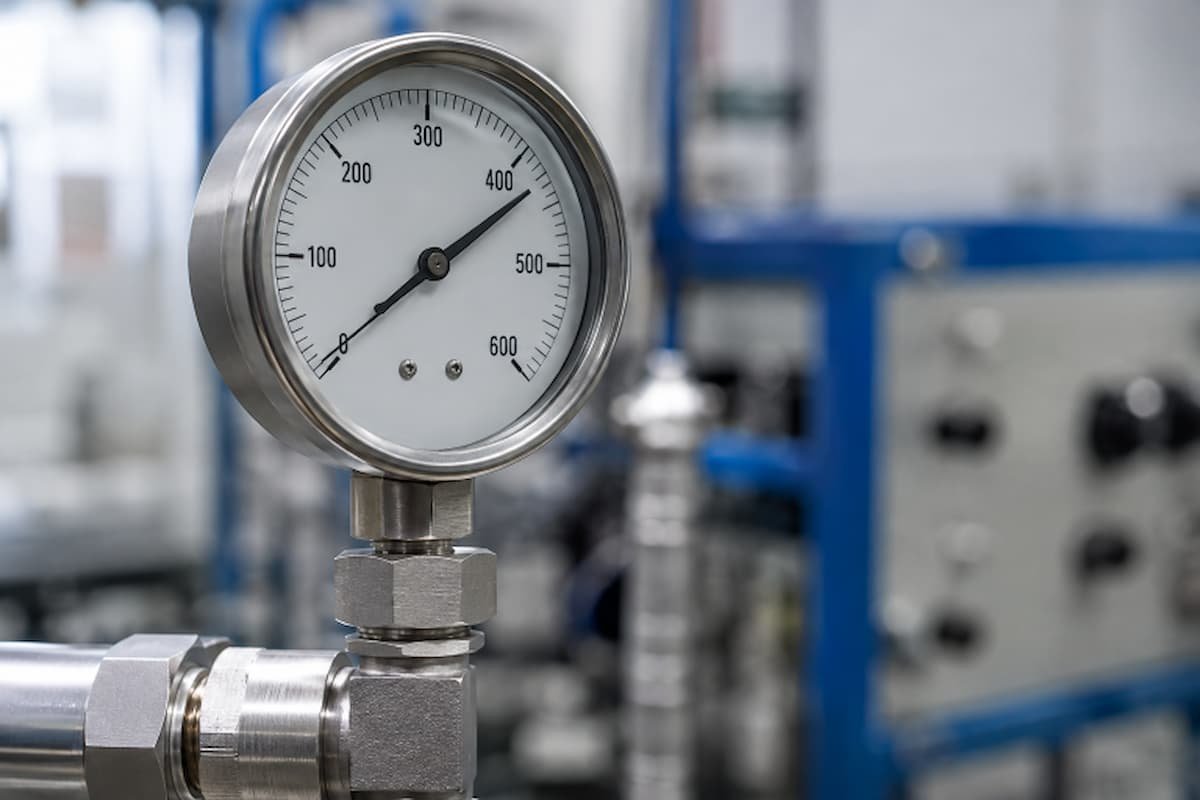
- Hydrostatic testing: Often selected when a liquid is compatible with the equipment, and reducing stored energy is important.
- Pneumatic testing: May be necessary when liquid could contaminate, corrode, freeze, or otherwise damage the equipment. Because compressed gas can release substantial stored energy, exclusion zones and procedural controls are especially important.
- Combined testing: Some components require pressure testing alongside temperature changes, repeated cycles, vibration, or external loads to represent expected service conditions better.
Pre-Test Safety Checks
Many avoidable testing problems originate in the setup. Before pressurization, complete a deliberate review of the equipment, instruments, and work area.
- Confirm that the equipment and every temporary connection are rated for the approved test conditions.
- Inspect hoses, fittings, valves, pumps, blinds, vents, drains, and pressure-relief arrangements.
- Verify that gauges are appropriate for the pressure range and have current calibration records.
- Inspect welds, flanges, threads, seals, and connection points before the test begins.
- Remove loose tools and unnecessary materials from the test area.
- Install barriers and warning signs, then restrict access to authorized personnel.
- Hold a pre-test briefing covering the sequence, communication method, hazard zone, and stop-work authority.
How to Run the Test in Clear Stages
- Inspect the setup. Confirm that the equipment identification, instruments, connections, and test medium match the approved plan.
- Fill or charge the system. For liquid testing, remove trapped air according to the procedure because it can affect readings and increase uncertainty.
- Raise pressure gradually. Use controlled increments rather than rushing to the target pressure.
- Observe conditions. Watch for seepage, pressure changes, unusual sounds, movement, distortion, temperature shifts, or mismatched gauge readings.
- Hold at the required level. Maintain the specified pressure and hold duration while keeping personnel outside the defined hazard area.
- Depressurize safely. Reduce pressure in a controlled manner before opening vents, drains, or connections.
What Test Data Can Reveal
Pressure-test results are evidence, not simply a pass-or-fail label. A pressure drop can indicate a leak, but it may also reflect temperature change, trapped air, or an instrument issue. Comparing observations, gauge readings, hold time, and environmental conditions helps the team determine whether the result is meaningful.
Useful findings may include visible leakage at a seal or fitting, unexpected component movement, unequal readings between gauges, distortion under load, or performance changes across repeated pressure cycles. For equipment subject to process safety management requirements, OSHA describes mechanical integrity as a key element for maintaining critical process equipment.
When External Loading and Temperature Matter
A component can hold internal pressure during a stationary test and still perform poorly once real installation forces are introduced. Pipe weight, misalignment, vibration, thermal expansion, cold starts, elevated temperatures, and repeated cycles may all change how a component behaves in service.
For example, a valve may retain pressure on a test stand but respond differently when piping connected to it places a side load on its body. When practical, the test plan should reflect the forces and temperatures the equipment is expected to experience after installation.
Documentation That Makes Results Useful
Clear records turn a completed test into a maintenance asset. They can support future troubleshooting, repair decisions, customer reviews, audits, and repeat testing.
- Equipment name, identification number, location, and configuration
- Test date, responsible personnel, and test medium
- Target pressure, pressure steps, hold time, and environmental conditions
- Gauge identification, range, and calibration status
- Photographs of the setup and any observed defects
- Recorded readings, final disposition, corrective actions, and retest requirements
How to Choose a Pressure Testing Partner
Before selecting a provider, ask whether the team can handle the required pressure range, test medium, temperature conditions, loading conditions, and documentation requirements. Also ask how instruments are calibrated, whether reports clearly explain the setup and results, and whether the provider has experience with the relevant equipment category.
Houston organizations may also benefit from choosing a partner that can coordinate specialized testing without requiring equipment owners to split pressure, cycling, and environmental evaluations into separate projects. The National Board of Boiler and Pressure Vessel Inspectors provides technical resources focused on inspection and pressure equipment safety that help teams understand why qualified processes and complete records matter.
Common Questions About Industrial Pressure Testing
How often should equipment be pressure tested?
Frequency depends on the equipment type, service history, operating conditions, manufacturer guidance, customer requirements, and applicable rules. One schedule should not be applied to every asset without reviewing those factors.
Can a pressure test replace a visual inspection?
No. Visual inspection can reveal corrosion, damage, poor artistry, or unsafe setup conditions before pressure is applied. Both activities serve different purposes.
What should happen after a failed test?
Isolate the equipment, document the result, investigate the cause, complete approved repairs, and retest under controlled conditions. Workers should never tighten, adjust, or repair a pressurized connection.
Final Checklist for Houston Site Managers
- Is the test purpose clearly defined?
- Are equipment limits and required test conditions documented?
- Are gauges, hoses, fittings, and pumps properly rated?
- Is the test area marked, controlled, and understood by the team?
- Are all readings and observations being recorded?
- Is there a safe depressurization method and a clear response plan for irregular results?
A dependable pressure-testing program is built on preparation, qualified personnel, accurate instruments, controlled execution, and useful follow-up. For Houston industrial teams, treating every test as an opportunity to learn about the actual condition of equipment can support safer operations, better repair planning, and fewer avoidable interruptions.