
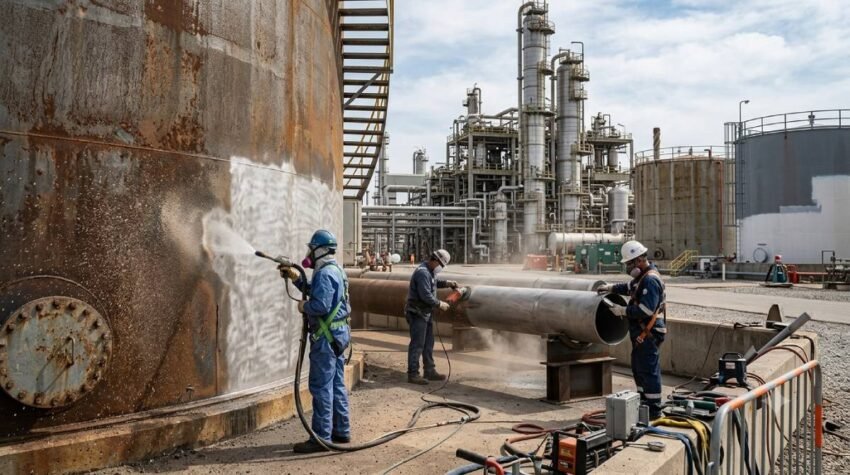
Industrial assets face a wide range of conditions that can affect their long-term condition and value. Machinery, structural steelwork, processing equipment, and other components may encounter moisture, chemicals, abrasion, and environmental contamination throughout their service life. Protecting these assets requires more than responding to visible damage once it becomes serious. Effective asset management often involves inspections, preventive maintenance, and appropriate protective treatments. Professional surface preparation, supported by specialist knowledge and equipment from providers such as Surface Prep, can form an important part of this wider protection strategy.
Understanding Industrial Asset Protection
Industrial asset protection involves maintaining the condition, reliability and useful life of equipment, structures and other business-critical resources.
Assets may represent substantial financial investments, and their deterioration can create costs beyond the immediate repair. Production interruptions, replacement requirements, additional maintenance and operational disruption may all affect the business.
A structured protection strategy therefore considers each asset’s risks and identifies suitable measures to manage deterioration over time.
Why Surface Condition Matters
An asset’s surface condition can provide important information about its exposure and maintenance needs.
Corrosion, damaged coatings, accumulated contamination and visible wear may indicate that existing protective measures are becoming less effective. Although surface appearance does not always reveal an asset’s full condition, it can help identify areas that require further investigation.
Surface preparation supports asset protection by removing unwanted materials and establishing suitable conditions for inspection, repair and protective treatment.
Addressing Environmental Exposure
Industrial assets operate in many different environments, each with its own challenges.
Outdoor structures may experience rain, humidity and temperature changes, while equipment inside manufacturing facilities may be exposed to chemicals, process residues or abrasive materials.
The appropriate protection strategy depends on these conditions. Therefore, consider surface preparation alongside the expected exposure and the coating or treatment intended to protect the substrate.
Supporting Protective Coating Systems
Protective coatings commonly reduce direct exposure between a material and its operating environment.
Their effectiveness depends on several factors, including product selection, application quality, curing and surface preparation. A coating applied over rust, grease, or poorly bonded material may not perform as intended.
Proper preparation creates the cleanliness and surface profile needed for the protective treatment to bond effectively.
Managing Corrosion Risks
Corrosion can gradually affect metal assets, potentially reducing material thickness and increasing maintenance requirements.
Surface preparation may be necessary to remove existing corrosion products before repair or recoating. This can help establish a suitable substrate for the selected protective system.
However, surface preparation is only one part of corrosion management. Environmental exposure, material selection, coating design and regular inspection also influence long-term protection.
Protecting Assets During Refurbishment
Refurbishment allows businesses to improve the condition of existing assets without necessarily replacing them.
Before refurbishment begins, surfaces may need cleaning and preparation so you can assess their condition. Existing coatings and contaminants can conceal deterioration that needs attention.
Once you’ve evaluated the substrate, you can plan appropriate repairs and protective treatments. This helps ensure refurbishment addresses underlying problems rather than simply improving appearance.
Supporting Longer Equipment Service Life
Extending the useful life of industrial equipment can provide financial and operational benefits.
Surface deterioration may lead to premature replacement when protective coatings fail, or corrosion is allowed to progress. Planned maintenance can help preserve equipment condition by addressing these issues.
Surface preparation supports this process by enabling suitable repairs and protective treatments, although overall equipment lifespan also depends on mechanical condition, operating demands and other maintenance factors.
Reducing the Risk of Expensive Repairs
Small areas of coating damage or surface deterioration can sometimes become more extensive when left untreated.
A preventative approach allows businesses to identify problems and assess whether localised preparation and repair are appropriate. Addressing issues early may reduce later work.
The most economical intervention depends on the asset’s condition and operating environment, so inspection and professional judgement remain important.
Improving Asset Maintenance Planning
Effective asset management requires information about equipment condition and future maintenance needs.
Regular inspections can help identify where surface deterioration is occurring and whether protective treatments remain effective. Recording these findings allows maintenance teams to prioritise work and plan resources.
Surface preparation can then be incorporated into scheduled maintenance or refurbishment programmes, reducing reliance on entirely reactive repairs.
Considering Different Industrial Materials
Industrial assets are made from a variety of materials, including different metals and engineered components.
Each material may respond differently to preparation processes. A technique suitable for heavy steelwork could be inappropriate for a delicate component or a substrate with strict dimensional tolerances.
Selecting the right method reduces the risk of unnecessary damage while achieving the required surface condition.
The Importance of Surface Preparation Standards
Industrial coating and preparation projects often require defined cleanliness and surface-profile levels.
Using appropriate specifications sets clear expectations for what preparation must achieve before subsequent treatments begin. It also provides a basis for inspection and quality control.
Consistent standards are especially valuable when multiple components or large areas need treatment, helping reduce variation across a project.
Balancing Initial Costs With Long-Term Value
Asset protection decisions should consider the cost of maintaining equipment throughout its working life.
Choosing a preparation method solely because it has the lowest immediate cost may not always provide the best long-term outcome. Inadequate preparation can contribute to premature coating failure and additional maintenance expenditure.
Equally, excessive preparation may be unnecessary for certain applications. The objective is to select a proportionate process that meets the technical requirements of the asset and protective treatment.
Supporting Operational Reliability
Surface preparation does not directly address every cause of industrial equipment failure, but it can improve the overall condition of key assets.
Protective coatings and suitable maintenance can help manage environmental deterioration that might otherwise affect equipment or structures. Maintaining these protective measures can support more predictable asset management.
For businesses operating critical equipment, this can be part of a wider reliability strategy that includes inspections, servicing, and planned repairs.
Integrating Surface Preparation Into Asset Management
Surface preparation works best when considered alongside other maintenance and protection activities.
Asset managers can assess environmental risks, monitor coating condition, schedule inspections and identify suitable refurbishment opportunities. They can then select preparation methods based on each asset’s condition and requirements.
This coordinated approach helps businesses move beyond isolated repairs towards more structured long-term protection.
Frequently Asked Questions (FAQs) About Surface Preparation and Industrial Asset Protection
Why is surface preparation important for asset protection?
It removes contaminants and deterioration while creating conditions suitable for inspection, repairs, and protective treatments. This can help maintain the effectiveness of broader asset protection measures.
Can surface preparation help extend asset lifespan?
When combined with appropriate coatings and maintenance, surface preparation can help manage deterioration and support continued asset use. The outcome depends on the material, environment and overall condition.
Which industrial assets may require surface preparation?
Machinery, steel structures, processing equipment, storage systems and other industrial components may require preparation during maintenance, refurbishment or protective coating work.
Does surface preparation prevent all forms of corrosion?
No. It creates suitable conditions for protective treatments, but future corrosion resistance also depends on coating selection, application, environmental exposure, and maintenance.
How does surface preparation support preventative maintenance?
It enables businesses to address surface deterioration during planned maintenance and prepare assets for protective treatment before damage worsens.
Conclusion
Surface preparation supports industrial asset protection by enabling cleaning, inspection, refurbishment, and the application of protective coatings. It helps businesses manage surface deterioration and create the conditions needed to preserve valuable equipment and structures.
For organisations seeking to improve long-term asset performance, preparation should form part of a coordinated maintenance strategy rather than being treated as an isolated task. Selecting the right method, clear specifications, regular inspections, and timely protective treatment can reduce avoidable deterioration and support more effective management of industrial assets.